August 24, 2025
|8 minuti di lettura

Per anni, una dura realtà ha afflitto il marketing B2B: secondo Forrester Research, meno dell’1% dei lead si converte mai in clienti. Account-Based Marketing (ABM) fornisce una soluzione strategica a questo fallimento fondamentale del go-to-market. Questo segnala una massiccia cattiva allocazione di capitale all’inizio del funnel. Tuttavia, l’ABM stesso ha faticato con le sue sfide di misurazione. Uno studio approfondito ha rilevato che 54% di programmi ABM hanno difficoltà ad affrontare la sfida critica di misurare e dimostrare il proprio Return on Investment (ROI). (ITSMA e ABM Leadership Alliance) Per i leader globali, questo si traduce in una battaglia costante. Devono tentare di scalare un modello ad alto consumo di risorse senza dati chiari per difendere il suo contributo finanziario. È stata una strategia di sforzo a forza bruta, dove il successo era spesso correlato al numero di dipendenti, non all’eleganza strategica. La promessa era chiara, ma la realtà era una collezione di campagne disallineate, non un sistema coeso. Tuttavia, quell’ paradigma operativo non soddisfa più le esigenze di un motore go-to-market moderno.
L’IA sta trasformando l’ABM da una serie di giocate manuali a un sistema operativo (OS) coeso, basato sui dati e scalabile. Per i leader responsabili di entrate prevedibili ed efficienza del capitale, l’IA fornisce il framework per gestire l’ABM con la precisione, la governance e l’impatto misurabile richiesto dalla C-suite. Questa non è una conversazione sull’automazione delle attività. Si tratta di integrare l’intelligenza nel nucleo stesso del tuo motore go-to-market. Questo articolo fornisce la blueprint esecutiva per questo nuovo OS ABM, concentrandosi sulle trasformazioni critiche che ti permettono di:
Let’s architect the future of account-based strategy.
The foundation of any successful ABM program is the intelligent allocation of capital toward high-potential accounts. The traditional Ideal Customer Profile (ICP) is built on static firmographic data like industry and revenue. This is a fundamentally reactive model. It identifies accounts that fit past criteria, not those signaling future intent. This approach often leads to wasted resources targeting well-fitting but dormant companies, a critical inefficiency for any ROI-focused organization. An intelligent ABM OS replaces this rear-view mirror with a predictive, forward-looking lens. It synthetically understands the market by ingesting and analyzing a massive volume of real-time data. Research from Forrester shows that B2B firms leveraging intent data are significantly more likely to exceed their pipeline and revenue goals (Nora Conklin).
AI achieves this by creating a multi-layered understanding of an account’s readiness. This analysis goes far beyond what a human team could accomplish.
This transforms account selection into a continuous, market-driven process. The ABM OS can then automatically prioritize accounts for different tiers of engagement. This ensures that your most expensive resources are always aimed at maximum revenue potential, unlocking new levels of efficiency and capital productivity.
Targeting the right account is necessary but insufficient. A campaign will fail if it doesn’t penetrate the complex web of decision-makers. B2B buying committees now average 6-10 stakeholders (Gartner, “The B2B Buying Journey”). Many of these individuals avoid direct contact, meaning a significant portion of the decision-making process happens “in the dark.” Relying on manually identified contacts from a CRM is a recipe for incomplete coverage. AI is purpose-built to illuminate this invisible network. The ABM OS deconstructs the entire buying committee by synthesizing data from public sources and professional networks. It identifies not just titles but also their probable influence and role.
Instead of just a list of names, AI maps out functional roles within the committee. This allows for highly nuanced messaging. 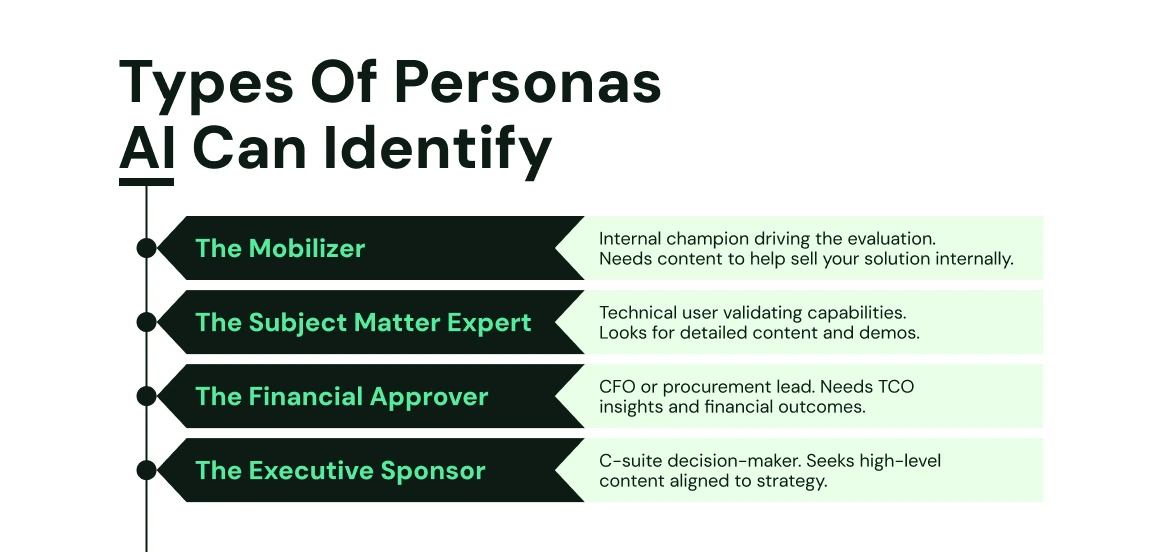
For each identified persona, a different messaging track can be deployed. This level of nuanced targeting, scaled across hundreds of accounts, is impossible without an AI-driven system. It replaces strategic ambiguity with a data-driven blueprint for building consensus.
Personalization is the core tactic of ABM. However, manual orchestration across multiple channels is an operational bottleneck that prevents global scale. An intelligent ABM OS solves this by automating the coordination of touchpoints. It ensures every interaction is connected, consistent, and contextually aware. This addresses a key challenge for global leaders: ensuring a consistent customer experience across all markets.
Imagine a Tier 1 account enters an “in-market” state. The OS triggers a 30-day “Executive Buy-In” play, a pre-architected sequence for maximum impact.
This entire sequence is dynamic. The AI adapts the cadence, messaging, and channel mix based on real-time engagement data. This ensures a truly personalized, not just automated, experience.
The ultimate test of any marketing strategy in the C-suite is its proven impact on revenue. Vague metrics like “account engagement” or Marketing Qualified Leads (MQLs) are no longer sufficient. Leaders demand a clear, data-backed line connecting ABM investment to financial performance. AI-powered attribution models finally deliver this. The efficacy of this approach is clear. According to the ITSMA and ABM Leadership Alliance, companies with mature ABM programs, underpinned by strong measurement, report significant, quantifiable improvements in revenue and pipeline (“2023 ABM Benchmark Study”).
Traditional attribution is fundamentally flawed for complex ABM journeys. AI introduces sophisticated, multi-touch attribution models that provide a more accurate picture of performance. Data-Driven Attribution: This model uses machine learning to analyze every touchpoint across all converted and non-converted accounts. It assigns credit based on each touchpoint’s statistical contribution to the outcome. This provides the most accurate and unbiased view of what is driving revenue. U-Shaped & W-Shaped Models: These give credit to multiple key touchpoints, such as the first touch (awareness), lead creation (engagement), and opportunity creation (sales handoff). This provides a more holistic view of the funnel than linear models. By implementing these models, the ABM OS can show precisely how specific campaigns influenced deal velocity, contract value, and win rates. This elevates the ABM conversation from one about marketing activities to one about measurable financial outcomes.
For a global enterprise, the greatest threat to scaling a sophisticated AI strategy is fragmentation. Without a robust governance framework, regional autonomy can lead to brand inconsistencies and compliance risks with regulations like the General Data Protection Regulation (GDPR). 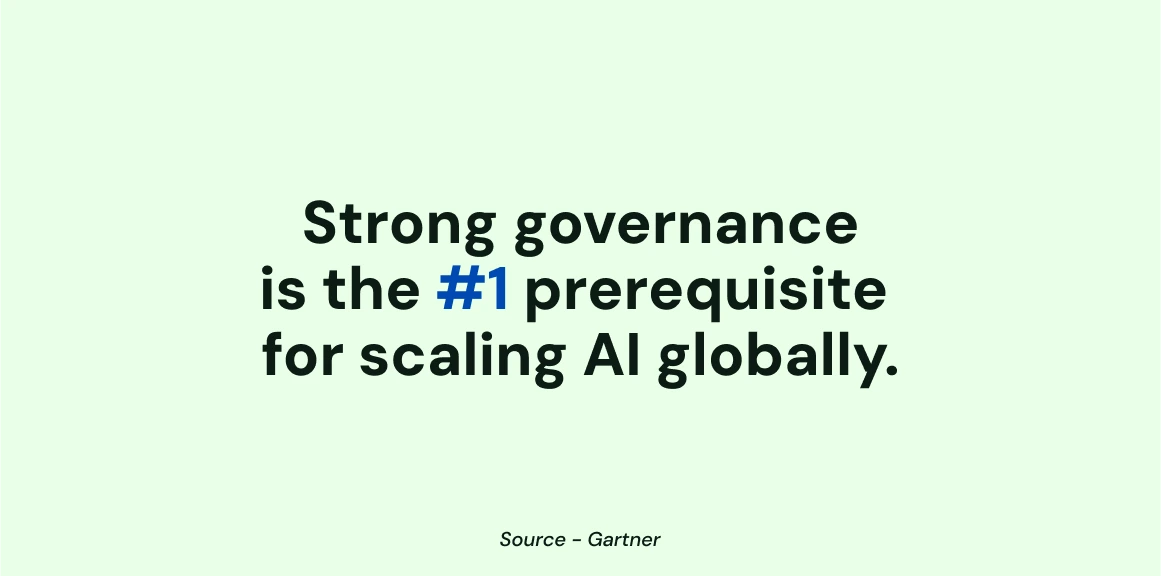 As Gartner analysts frequently note, strong governance is a prerequisite for scaling any AI initiative successfully (Gartner, “Realize the Promise of AI”). The ABM OS is built upon a foundation of centralized governance. This provides the control necessary to protect the enterprise while empowering teams.
Traditional ABM was a strategy built on commendable effort. However, it was hampered by operational friction and measurement ambiguity. It was a collection of parts, not a cohesive machine. The AI-driven ABM Operating System represents a new architecture. It ensures capital is allocated with predictive intelligence. The entire buying committee is engaged with precision. Personalized journeys are orchestrated on a global scale. Financial contribution is proven with data. And the entire engine operates within a secure, compliant governance framework. For the modern B2B leader, the objective is no longer to simply “do ABM.” It is to architect an intelligent, account-based go-to-market engine that is predictable, scalable, and engineered to deliver measurable financial impact. Successfully architecting an AI-driven ABM OS requires a unique combination of strategic foresight and technical expertise. Navigate this transformation and build the go-to-market engines of the future.
Please enter your email address so we can send you a one-time pass code and verify if you are an existing subscriber.
 CH
CH 

 CH
CH